Sorry, you need to enable JavaScript to visit this website.
Skip to main content
University of Cambridge
  • Study at Cambridge
  • About the University
  • Research at Cambridge
Quick links
  • For Cambridge students
  • For staff
  • For alumni
  • For our researchers
  • Business and enterprise
  • Colleges and Departments
  • Give to Cambridge
  • Libraries
  • Museums and collections
Home
  • Study at Cambridge
  • Undergraduate
    • Undergraduate courses
    • Applying
    • Events and open days
    • Fees and finance
  • Postgraduate
    • Postgraduate courses
    • How to apply
    • Postgraduate events
    • Fees and funding
  • International students
  • Continuing education
  • Lifelong learning
  • Courses in education
  • About the University
  • How the University and Colleges work
  • Term dates and calendars
  • History
  • Map
  • Visiting the University
  • News
  • Annual reports
  • A global university
  • Equality and diversity
  • Events
  • Public engagement
  • Jobs
  • Give to Cambridge
  • Research at Cambridge
  • For Cambridge students
  • For staff
  • For alumni
  • For our researchers
  • Business and enterprise
  • Colleges and Departments
  • Give to Cambridge
  • Libraries
  • Museums and collections

Breadcrumb

  • Home
  • bioarchaeology

bioarchaeology Subscribe to RSS - bioarchaeology

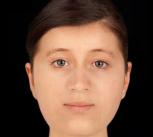
Facial reconstruction of the Trumpington Cross burial woman by Hew Morrison

Face of Anglo-Saxon teen VIP revealed with new evidence about her life

20 Jun 2023
The face of a 16-year-old woman buried near Cambridge in the 7th century with the ‘Trumpington Cross’ has been reconstructed following analysis of her...
Read more

Anglo-Saxon kings were mostly veggie but peasants treated them to huge BBQs

21 Apr 2022
Very few people in England ate large amounts of meat before the Vikings settled, and there is no evidence that elites ate more meat than other people...
Read more

Medieval ‘birthing girdle’ parchment was worn during labour, study suggests

10 Mar 2021
Scientists have used emerging proteomic techniques to find traces of ancient vaginal fluid, honey and milk on a rare manuscript from the late 15th...
Read more
Cambridge University Women’s Boat Club Openweight crew rowing during the 2017 Boat Race on the river Thames in London. The Cambridge women’s crew beat Oxford in the race. The members of this crew were among those analysed in the study.

Prehistoric women’s manual work was tougher than rowing in today’s elite boat crews

29 Nov 2017
The first study to compare ancient and living female bones shows that women from early agricultural eras had stronger arms than the rowers of...
Read more
Example of a modified skull, a practice assumed to be Hunnic that may have been appropriated by local farmers within the bounds of the Western Roman Empire.

Tiller the Hun? Farmers in Roman Empire converted to Hun lifestyle – and vice versa

22 Mar 2017
New archaeological analysis suggests people of Western Roman Empire switched between Hunnic nomadism and settled farming over a lifetime. Findings may...
Read more
Neanderthal man

Neanderthals may have been infected by diseases carried out of Africa by humans, say researchers

11 Apr 2016
Review of latest genetic evidence suggests infectious diseases are tens of thousands of years older than previously thought, and that they could jump...
Read more
Left: Roman latrines from Lepcis Magna in Libya. Right: Roman whipworm egg from Turkey

Roman toilets gave no clear health benefit, and Romanisation actually spread parasites

08 Jan 2016
Archaeological evidence shows that intestinal parasites such as whipworm became increasingly common across Europe during the Roman Period, despite the...
Read more
Roman toilets

Opinion: Why the Romans weren’t quite as clean as you might have thought

06 Jan 2016
Piers Mitchell (Department of Biological Anthroplogy) discusses what Roman toilets did for the health of the population.
Read more

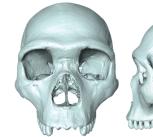
‘Virtual fossil’ reveals last common ancestor of humans and Neanderthals

18 Dec 2015
New digital techniques have allowed researchers to predict structural evolution of the skull in the lineage of Homo sapiens and Neanderthals, in an...
Read more
Archaeologists outside the entrance to the Mota cave in the Ethiopian highlands, where the remains containing the ancient genome were discovered.

Ancient genome from Africa sequenced for the first time

08 Oct 2015
DNA from 4,500-year-old Ethiopian skull reveals a large migratory wave of West Eurasians into the Horn of Africa around 3,000 years ago had a genetic...
Read more

Pagination

  • Page 1
  • Next page ››
Subscribe to bioarchaeology

Connect with us

  • Facebook
  • Instagram
  • LinkedIn
  • X
  • YouTube
University of Cambridge

© 2026 University of Cambridge

  • Contact the University
  • Accessibility
  • Freedom of information
  • Privacy policy and cookies
  • Statement on Modern Slavery
  • Terms and conditions
  • University A-Z

Study at Cambridge

  • Undergraduate
  • Postgraduate
  • Lifelong learning
  • Courses in education

About the University

  • How the University and Colleges work
  • Give to Cambridge
  • Jobs
  • Map
  • Visiting the University
  • Cambridge University Press & Assessment

Research at Cambridge

  • Research news
  • About research at Cambridge
  • Public engagement