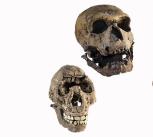
Genetic study reveals hidden chapter in human evolution
18 March 2025Modern humans descended from not one, but at least 2 ancestral populations that drifted apart and later reconnected, long before modern humans spread across the globe.

Modern humans descended from not one, but at least 2 ancestral populations that drifted apart and later reconnected, long before modern humans spread across the globe.

Some of the first human beings to arrive in Tasmania, over 41,000 years ago, used fire to shape and manage the landscape, about 2,000 years earlier than previously thought.

Archaeological discoveries made on the outskirts of Canterbury, England, confirm the presence of early humans in southern Britain between 560,000 and 620,000 years ago, making it one of the earliest known Palaeolithic sites in northern Europe.
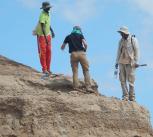
The age of the oldest fossils in eastern Africa widely recognised as representing our species, Homo sapiens, has long been uncertain. Now, dating of a massive volcanic eruption in Ethiopia reveals they are much older than previously thought.

Two children’s milk teeth buried deep in a remote archaeological site in north eastern Siberia have revealed a previously unknown group of people lived there during the last Ice Age.

An extinct strain of the human Hepatitis B virus (HBV) has been discovered in Bronze Age human skeletons found in burial sites across Europe and Asia.
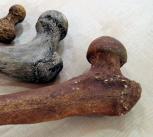
The largest study to date of body sizes over millions of years finds a “pulse and stasis” pattern to hominin evolution, with surges of growth in stature and bulk occurring at different times. At one stage, our ancestors got taller around a million years before body mass caught up.
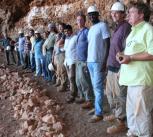
With Daesh militia at their heels, a handful of brave Libyan archaeologists completed the excavation of the Haua Fteah cave in Cyrenaica, North Africa. Cambridge archaeologist Dr Giulio Lucarini tells their story.
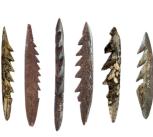
A project exploring the role of East Africa in the evolution of modern humans has amassed the largest and most diverse collection of prehistoric bone harpoons ever assembled from the area. The collection offers clues about the behaviour and technology of prehistoric hunter-gatherers.

Several major studies, published today, concur that virtually all current global human populations stem from a single wave of expansion out of Africa. Yet one has found 2% of the genome in Papuan populations points to an earlier, separate dispersal event – and an extinct lineage that made it to the islands of Southeast Asia and Oceania.

© 2025 University of Cambridge