Explore life in the Universe with new postgraduate programme
A new postgraduate programme will train researchers to understand life's origins, search for habitable planets and consider the most profound question of all: are we alone?
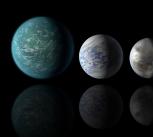
In the search for life elsewhere in the Universe, scientists have traditionally looked for planets with liquid water at their surface. But, rather than flowing as oceans and rivers, much of a planet’s water can be locked in rocks deep within its interior.
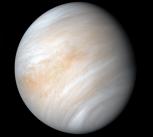
The unusual behaviour of sulphur in Venus’ atmosphere cannot be explained by an ‘aerial’ form of extra-terrestrial life, according to a new study.
A new way of dating collisions between asteroids and planetary bodies throughout our Solar System’s history could help scientists reconstruct how and when planets were born.
New research led by the University of Cambridge has found rare evidence – preserved in the chemistry of ancient rocks from Greenland - which tells of a time when Earth was almost entirely molten.
© 2026 University of Cambridge