
Home
  • Study at Cambridge
  • About the University
  • Research at Cambridge
  • For Cambridge students
  • For staff
  • For alumni
  • For our researchers
  • Business and enterprise
  • Colleges and Departments
  • Give to Cambridge
  • Libraries
  • Museums and collections
  • Study at Cambridge
  • Undergraduate
    • Courses
    • Applying
    • Events and open days
    • Fees and finance
  • Postgraduate
    • Postgraduate courses
    • How to apply
    • Fees and funding
    • Postgraduate events
  • International students
  • Professional and continuing education
  • Executive and professional education
  • Courses in education
  • About the University
  • How the University and Colleges work
  • Term dates
  • History
  • Map
  • Visiting the University
  • News
  • A global university
  • Annual reports
  • Equality and diversity
  • Events
  • Public engagement
  • Jobs
  • Give to Cambridge
  • Research at Cambridge
  • For Cambridge students
  • For staff
  • For alumni
  • For our researchers
  • Business and enterprise
  • Colleges and Departments
  • Give to Cambridge
  • Libraries
  • Museums and collections
  • Home
  • People
  • Articles about 'Manuel Will'

Articles about 'Manuel Will'

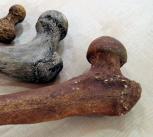
Femoral head bones of different hominin species. From top to bottom: Australopithecus afarensis (4-3 million years; ~40 kg, 130 cm); Homo ergaster (1.9-1.4 million years; 55-60 kg; ~165 cm); Neanderthal (200.000-30.000 years; ~70 kg; ~163 cm).

Height and weight evolved at different speeds in the bodies of our ancestors

08 November 2017

The largest study to date of body sizes over millions of years finds a “pulse and stasis” pattern to hominin evolution, with surges of growth in stature and bulk occurring at different times. At one stage, our ancestors got taller around a million years before body mass caught up.
Read More
Cast of the 'Nariokotome boy' (Homo ergaster) skeleton

Earliest humans had diverse range of body types, just as we do today

27 March 2015

New research harnessing fragmentary fossils suggests our genus has come in different shapes and sizes since its origins over two million years ago, and adds weight to the idea that humans began to colonise Eurasia while still small and lightweight.

Read More
Subscribe to Manuel Will

Connect with us

  • Facebook
  • Instagram
  • LinkedIn
  • X
  • YouTube
Cambridge University

© 2025 University of Cambridge

  • Contact the University
  • Accessibility statement
  • Freedom of information
  • Privacy policy and cookies
  • Statement on Modern Slavery
  • Terms and conditions
  • University A-Z

Study at Cambridge

  • Undergraduate
  • Postgraduate
  • Professional and continuing education
  • Executive and professional education
  • Courses in education

About the University

  • How the University and Colleges work
  • Give to Cambridge
  • Jobs
  • Maps
  • Visiting the University
  • Cambridge University Press & Assessment

Research at Cambridge

  • Research news
  • About research at Cambridge
  • Public engagement