Astronomers have detected a giant exoplanet – between three and ten times the size of Jupiter – hiding in the swirling disc of gas and dust...
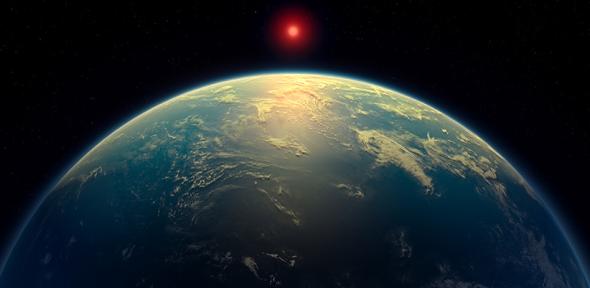
Astronomers have detected the most promising signs yet of a possible biosignature outside the solar system, although they remain cautious.
The European Space Agency’s Gaia spacecraft has been powered down, after more than a decade spent gathering data that are now being used to unravel...
Hiranya Peiris holds the Professorship of Astronomy (1909) at Cambridge, the first woman to do so in the 115-year history of this prestigious chair...
Dr Matthew Bothwell is an astrophysicist, science communicator and author, and the current Public Astronomer at the Institute of Astronomy...
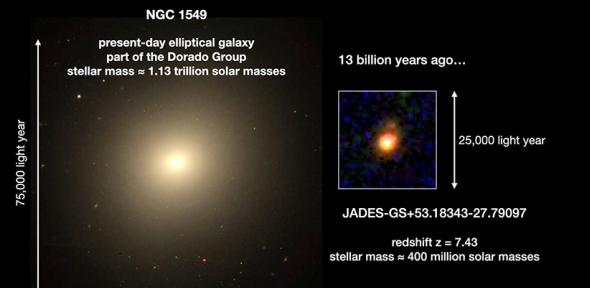
Astronomers have used the NASA/ESA James Webb Space Telescope (JWST) to observe the ‘inside-out’ growth of a galaxy in the early universe, only 700...
Astronomers have detected carbon in a galaxy just 350 million years after the Big Bang, the earliest detection of any element in the universe other...
The European Southern Observatory (ESO) has signed an agreement for the design and construction of ANDES , the ArmazoNes high Dispersion Echelle...
An international team of astronomers, led by the University of Cambridge, has used the James Webb Space Telescope to find evidence for an ongoing...
A galaxy that suddenly stopped forming new stars more than 13 billion years ago has been observed by astronomers.
The winds that help to form planets in the gaseous discs of early solar systems have been imaged for the first time by the James Webb Space Telescope...
A team of astronomers, led by the University of Cambridge, has used the NASA/ESA/CSA James Webb Space Telescope to reveal, for the first time, what...