Sorry, you need to enable JavaScript to visit this website.
Skip to main content
University of Cambridge
  • Study at Cambridge
  • About the University
  • Research at Cambridge
Quick links
  • For Cambridge students
  • For staff
  • For alumni
  • For our researchers
  • Business and enterprise
  • Colleges and Departments
  • Give to Cambridge
  • Libraries
  • Museums and collections
Home
  • Study at Cambridge
  • Undergraduate
    • Undergraduate courses
    • Applying
    • Events and open days
    • Fees and finance
  • Postgraduate
    • Postgraduate courses
    • How to apply
    • Postgraduate events
    • Fees and funding
  • International students
  • Continuing education
  • Lifelong learning
  • Courses in education
  • About the University
  • How the University and Colleges work
  • Term dates and calendars
  • History
  • Map
  • Visiting the University
  • News
  • Annual reports
  • A global university
  • Equality and diversity
  • Events
  • Public engagement
  • Jobs
  • Give to Cambridge
  • Research at Cambridge
  • For Cambridge students
  • For staff
  • For alumni
  • For our researchers
  • Business and enterprise
  • Colleges and Departments
  • Give to Cambridge
  • Libraries
  • Museums and collections

Breadcrumb

  • Home
  • Molecule

Molecule Subscribe to RSS - Molecule

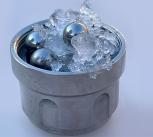
Part of the set-up for creating medium-density amorphous ice: ordinary ice and steel balls in a jar (not amorphous ice)

New form of ice is like a snapshot of liquid water

02 Feb 2023
A collaboration between scientists at Cambridge and UCL has led to the discovery of a new form of ice that more closely resembles liquid water than...
Read more
Medication

Method to predict drug stability could lead to more effective medicines

05 Mar 2018
Researchers from the UK and Denmark have developed a new method to predict the physical stability of drug candidates, which could help with the...
Read more

Silk “micrococoons” could be used in biotechnology and medicine

19 Jul 2017
Researchers have manufactured microscopic versions of the cocoons spun by silkworms, which could be used to store sensitive proteins and other...
Read more
Transmission electron microscopy image showing a molecular chaperone (the black dots) binding to thread-like amyloid-beta (Aβ42)

Molecular inhibitor breaks cycle that leads to Alzheimer’s

16 Feb 2015
A molecular chaperone has been found to inhibit a key stage in the development of Alzheimer’s disease and break the toxic chain reaction that leads to...
Read more
The study built on previous work which created synthetic molecules known as “XNA”, then used these as the basis of creating so-called “XNAzymes”.

World’s first artificial enzymes created using synthetic biology

01 Dec 2014
Enzymes made from artificial molecules which do not occur anywhere in nature have been shown to trigger chemical reactions in the lab, challenging...
Read more
Subscribe to Molecule

Connect with us

  • Facebook
  • Instagram
  • LinkedIn
  • X
  • YouTube
University of Cambridge

© 2026 University of Cambridge

  • Contact the University
  • Accessibility
  • Freedom of information
  • Privacy policy and cookies
  • Statement on Modern Slavery
  • Terms and conditions
  • University A-Z

Study at Cambridge

  • Undergraduate
  • Postgraduate
  • Lifelong learning
  • Courses in education

About the University

  • How the University and Colleges work
  • Give to Cambridge
  • Jobs
  • Map
  • Visiting the University
  • Cambridge University Press & Assessment

Research at Cambridge

  • Research news
  • About research at Cambridge
  • Public engagement