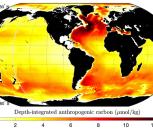
Giant underwater waves affect the ocean’s ability to store carbon
16 March 2023Underwater waves deep below the ocean’s surface – some as tall as 500 metres – play an important role in how the ocean stores heat and carbon, according to new research.

Underwater waves deep below the ocean’s surface – some as tall as 500 metres – play an important role in how the ocean stores heat and carbon, according to new research.
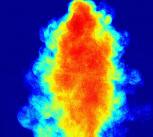
Decarbonisation of the energy system is the greatest challenge we face. At Cambridge’s Institute for Energy and Environmental Flows, world-leading researchers in fluid mechanics, thermodynamics and surface science are working to develop the solutions we need to replace fossil fuels and protect our planet.

A new study has shown that the airborne transmission of COVID-19 is highly random and suggests that the two-metre rule was a number chosen from a risk ‘continuum’, rather than any concrete measurement of safety.

Cambridge scientists have used downscaled laboratory models to show how sand dunes move through a landscape, revealing the conditions that determine whether they will pass through hurdles in their path – like pipelines or walls -- or get stopped in their tracks.

Species of single-celled algae use whip-like appendages called flagella to coordinate their movements and achieve a remarkable diversity of swimming gaits.

Researchers have finally worked out where the noise that makes kettles whistle actually comes from – a problem which has puzzled scientists for more than 100 years.

© 2025 University of Cambridge