Sorry, you need to enable JavaScript to visit this website.
Skip to main content
University of Cambridge
  • Study at Cambridge
  • About the University
  • Research at Cambridge
Quick links
  • For Cambridge students
  • For staff
  • For alumni
  • For our researchers
  • Business and enterprise
  • Colleges and Departments
  • Give to Cambridge
  • Libraries
  • Museums and collections
Home
  • Study at Cambridge
  • Undergraduate
    • Undergraduate courses
    • Applying
    • Events and open days
    • Fees and finance
  • Postgraduate
    • Postgraduate courses
    • How to apply
    • Postgraduate events
    • Fees and funding
  • International students
  • Continuing education
  • Lifelong learning
  • Courses in education
  • About the University
  • How the University and Colleges work
  • Term dates and calendars
  • History
  • Map
  • Visiting the University
  • News
  • Annual reports
  • A global university
  • Equality and diversity
  • Events
  • Public engagement
  • Jobs
  • Give to Cambridge
  • Research at Cambridge
  • For Cambridge students
  • For staff
  • For alumni
  • For our researchers
  • Business and enterprise
  • Colleges and Departments
  • Give to Cambridge
  • Libraries
  • Museums and collections

Breadcrumb

  • Home
  • ancient DNA

ancient DNA Subscribe to RSS - ancient DNA

Skeletons in an exposed grave

Oldest strains of plague caused deadly outbreaks 5,500 years ago

17 Jun 2026
Researchers have reconstructed the earliest known plague genomes, and shown for the first time that early forms of plague caused deadly outbreaks long...
Read more
Ancient migrations

Ancient DNA reveals reason for high MS and Alzheimer's rates in Europe

10 Jan 2024
Researchers have created the world’s largest ancient human gene bank, and used it to map the historical spread of genes – and diseases – over time as...
Read more

‘Bone biographies’ reveal life and times of medieval England’s common people

01 Dec 2023
Researchers have given medieval Cambridge residents the ‘Richard III treatment’ to reveal the hard-knock lives of those who lived in the city during...
Read more
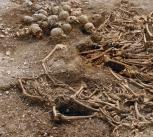
A mass grave of around 50 headless Vikings from a site in Dorset, UK. Some of these remains were used for DNA analysis.

World’s largest-ever DNA sequencing of Viking skeletons reveals they weren’t all Scandinavian

16 Sep 2020
Invaders, pirates, warriors – the history books taught us that Vikings were brutal predators who travelled by sea from Scandinavia to pillage and raid...
Read more

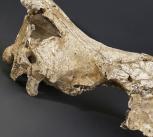
‘Game-changing’ research could solve evolution mysteries

11 Sep 2019
An evolution revolution has begun after scientists extracted genetic information from a 1.7 million-year-old rhino tooth – the largest and oldest...
Read more
The two 31,000-year-old milk teeth found at the Yana Rhinoceros Horn Site in Russia which led to the discovery of a new group of ancient Siberians

DNA from 31,000-year-old milk teeth leads to discovery of new group of ancient Siberians

05 Jun 2019
Two children’s milk teeth buried deep in a remote archaeological site in north eastern Siberia have revealed a previously unknown group of people...
Read more
Professor Eske Willerslev with Donna and Joey, two members of the Fallon Paiute-Shoshone tribe.

Ancient DNA analysis unlocks secrets of Ice Age tribes in the Americas

09 Nov 2018
Scientists have sequenced 15 ancient genomes spanning from Alaska to Patagonia and were able to track the movements of the first humans as they spread...
Read more
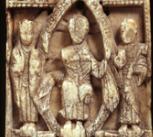
Left: Upper jaw bones of a walrus, with tusks removed. Right: an elaborately-carved ecclesiastical walrus ivory plaque.

Lost Norse of Greenland fuelled the medieval ivory trade, ancient walrus DNA suggests

08 Aug 2018
New DNA analysis reveals that, before their mysterious disappearance, the Norse colonies of Greenland had a “near monopoly” on Europe’s walrus ivory...
Read more
Two of the four possible combinations of ancient admixture highlighted by the researchers.

First Peoples: two ancient ancestries ‘reconverged’ with settling of South America

31 May 2018
New research using ancient DNA finds that a population split after people first arrived in North America was maintained for millennia before mixing...
Read more
Mass burial of battle victims from the Xiongnu period in Omnogobi, Mongolia, from which scientists extracted ancient DNA from for the study.

Oldest genetic evidence of Hepatitis B virus found in ancient DNA from 4,500 year-old skeletons

09 May 2018
An extinct strain of the human Hepatitis B virus (HBV) has been discovered in Bronze Age human skeletons found in burial sites across Europe and Asia...
Read more

Pagination

  • Page 1
  • Next page ››
Subscribe to ancient DNA

Connect with us

  • Facebook
  • Instagram
  • LinkedIn
  • X
  • YouTube
University of Cambridge

© 2026 University of Cambridge

  • Contact the University
  • Accessibility
  • Freedom of information
  • Privacy policy and cookies
  • Statement on Modern Slavery
  • Terms and conditions
  • University A-Z

Study at Cambridge

  • Undergraduate
  • Postgraduate
  • Lifelong learning
  • Courses in education

About the University

  • How the University and Colleges work
  • Give to Cambridge
  • Jobs
  • Map
  • Visiting the University
  • Cambridge University Press & Assessment

Research at Cambridge

  • Research news
  • About research at Cambridge
  • Public engagement