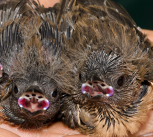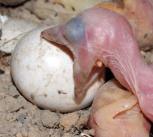
Eggs in nest

Cracking the great cuckoo cover-up

26 July 2023

African cuckoos may have met their match with the fork-tailed drongo, which scientists predict can detect and reject cuckoo eggs from their nest on almost every occasion, despite them on average looking almost identical to drongo eggs.

Read More

Scientists crack egg forging evolutionary puzzle

12 April 2022

A genetic study of Zambian cuckoo finches has solved one of nature’s biggest criminal cases, an egg forgery scandal two million years in the making. Its findings suggest that the victims of this fraud may now be gaining the upper hand.

Read More
Parasitic purple indigo bird

Cheating birds mimic host nestlings to deceive foster parents

02 October 2020

The common cuckoo is known for its deceitful nesting behaviour – by laying eggs in the nests of other bird species, it fools host parents into rearing cuckoo chicks alongside their own. While cuckoos mimic their host’s eggs, new research has revealed that a group of parasitic finch species in Africa have evolved to mimic their host’s chicks - and with astonishing accuracy.

Read More
Yao honey-hunter Orlando Yassene holds a male greater honeyguide temporarily captured for research in the Niassa National Reserve, Mozambique.

How humans and wild birds collaborate to get precious resources of honey and wax

22 July 2016

By following honeyguides, a species of bird, people in Africa are able to locate bees’ nests to harvest honey.  Research now reveals that humans use special calls to solicit the help of honeyguides and that honeyguides actively recruit appropriate human partners. This relationship is a rare example of cooperation between humans and free-living animals.

Read More
Helical jets from one supermassive black hole caused by a very closely orbiting companion (see blue dots). The third black hole is part of the system, but farther away and therefore emits relatively straight jets.

Black hole trio holds promise for gravity wave hunt

25 June 2014

The discovery of three closely orbiting supermassive black holes in a galaxy more than four billion light years away could help astronomers in the search for gravitational waves: the ‘ripples in spacetime’ predicted by Einstein.

Read More

Pages