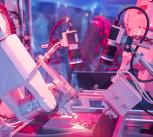

Cambridge AI spinout is helping factories become more productive, lower energy use and reduce emissions
18 December 2025University of Cambridge spinout Matta has raised $14 million in funding to transform how products are designed and manufactured.
University of Cambridge spinout Matta has raised $14 million in funding to transform how products are designed and manufactured.
As the UK Government continues to develop its national industrial strategy, the Cambridge Industrial Innovation Policy group at Cambridge’s Institute for Manufacturing has unveiled the UK Innovation Report 2025.

Professor Tim Minshall is the inaugural Dr John C Taylor Professor of Innovation at the University of Cambridge, Head of the Institute for Manufacturing (IfM) and Head of the IfM’s Centre for Technology Management (CTM). His research, teaching and engagement activities are focused on the links between manufacturing and innovation.
Chris Tagnon is the first Cambridge University student to be awarded a Masters in Motorsport scholarship.
A major new research hub led by the University of Cambridge and UCL aims to harness quantum technology to improve early diagnosis and treatment of disease.
Finding homes for used toasters, recycling batteries and inspiring a fondness for secondhand fashion are just three of the sustainability challenges Cambridge students addressed in the 2024 Easter term edition of the Engage for Change project.
Cambridge spinout, Echion Technologies has raised £29 million in investment capital to help it increase the production of its fast-charging, long-life battery material based on niobium.
The COVID-19 pandemic highlighted the interconnected nature of global supply chains, and showed how a disruption in one part of the world can have global effects. In 2021, supply disruptions were cost the global economy an estimated $1.9 trillion.
Senior executives and employees from research and technology teams at Boeing spent three days in Cambridge to celebrate 20 years of successful collaboration and to identify the next set of challenges they want to address.
Researchers have found that robots can have a ‘U-shaped’ effect on profits: causing profit margins to fall at first, before eventually rising again.