Structure of our courses
One of the most distinctive characteristics of Cambridge courses is that they cover the subject very broadly in the initial years and then become more specialised and offer a wide range of options in the later years.
Courses at Cambridge are divided into ‘Parts’ lasting one or two years:
- some subjects there’s a two-year Part I (often divided into Part IA and Part IB) and a one-year Part II.
- in others Part I lasts a year and is followed by a two-year Part II.
- Engineering and some science subjects also have a fourth year that leads to an MEng or MSci degree.
Flexibility and choice
When you start your course, you may not have a clear idea of the options you want to follow. Our curriculum allows for this as you can delay specialising until after you've explored the broad scope of the subject. Once you've confirmed which areas you're most interested in, you have the opportunity to focus your studies accordingly.
Generally speaking, as you progress through your course, the number and scope of options you can choose from increases. This means that, beyond any compulsory papers, you can usually tailor your course to your own specifications.
Your choices may not even be limited to those within your immediate subject field. Some paper options are available in more than one degree course where the subject matter overlaps (for example in History, Classics, and Anglo-Saxon, Norse, and Celtic).
Cambridge graduates are expected to achieve the same standard and depth in their final year as graduates from more specialised courses elsewhere. This is because:
- our students are some of the most able, motivated and hard working
- we provide them with some of the best teaching and learning facilities
Our courses offer a tough challenge, but one our students relish. We demand a lot, but we give a lot too:
- expert teachers and lecturers
- excellent library and computing facilities
- superb labs
- lots of support
Changing course
Most students take successive Parts of the same degree course. However, it’s possible to change subject after Part I or Part IA. Most changes are within the sciences or within the arts, but switching between broad areas is also possible. Therefore, a wide range of subject combinations is available.
Popular combinations/changes are noted under the course descriptions that follow: not everything is possible but there’s a surprising degree of flexibility. You need the agreement of your College that any change is in your educational interests, and that you have the necessary background in the subject to which you wish to change.
Assessment
Our courses offer a good compromise between the continuous assessment favoured by some universities and the emphasis placed on final exams by others.
Each Part of the course is self-contained. There are examinations at the end of each Part and there's no averaging out for your final degree result. In order to achieve an Honours degree you must pass examinations at both Part I and Part II.
- Written exams are the main form of assessment used - typically, you sit between four and eight written exams, for each Part.
- In many science subjects, a specified amount of practical work is assessed.
- Most courses include a research project or dissertation - these may be in addition to or as a substitute for a written exam.
The Tripos System
Our degree courses are also sometimes referred to as Triposes. The term ‘Tripos’ goes back to the seventeenth century when verses would be read out by someone sat on a three-legged stool (or Tripos) at graduation ceremonies. These became known as the Tripos verses. Eventually ‘Tripos’ was used to refer to courses offered by the University, when the lists of graduating students for each subject were written on the back of the Tripos verses.
Part-time and short courses
The University's Institute of Continuing Education (ICE) offers a wide range of parttime and short courses. These provide the opportunity for academic progression, or personal or career development at any stage in life and many lead to Certificate or Diploma qualifications.
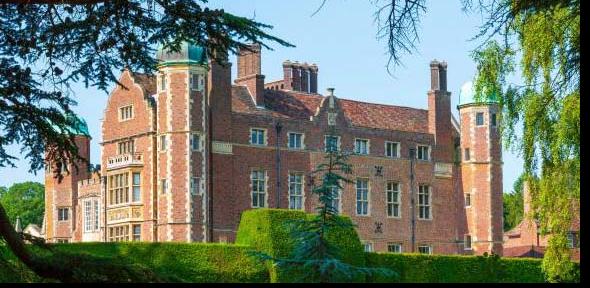
Subjects available include archaeology, history of art, literature, local and family history, genetics, theological studies and many others. You can take day, evening or residential courses or summer schools. You can study at the Institute's headquarters, Madingley Hall, as well as other locations in and around Cambridge, or for some courses you can study online
For information please contact the Institute of Continuing Education website at: www.cont-ed.cam.ac.uk.